

 From Steel Magnolias
MAJOR PERSONAL BIAS ACKNOWLEDGED!
Laughter is one of my most prized possessions. I love it. I live for it. And I am quite certain, I wouldn’t still be here without it.

“The Experts” tell us that humor can serve as a powerful, often overlooked tool in the grieving process, acting as both a mechanism for managing the intense pain and a way to honor a loved one.
And while grief is traditionally seen as a somber experience, research and personal testimonials (including mine!) indicate that laughter and joy can coexist with sorrow, providing necessary, short-term relief from the emotional, physical, and mental exhaustion of loss.
Scientifically, laughter triggers endorphins (natural feel-good chemicals), reduces cortisol (stress hormone), and stimulates dopamine (another happy hormone).
It can strengthen relationships, help shift emotional responses and reduce stress.
And I buy it. EVERY SINGLE BIT. Because...
Humor can be:
— A BREATHER
Grief is a non-stop, unwelcome 24/7 houseguest. It’s intense, demanding, and mean-tempered. It wasn’t invited and it won’t take a hint and leave.
So, moments of levity with friends and family can be a real relief! Especially if the relationship with the one who has passed included laughter. (And OMG, our was!) It can bring a chance to take a step back from the overwhelming sadness and feel normal again. Temporary, but wonderful nonetheless. Help give them a breather!
— A COPING MECHANISM
A good laugh over shared feelings or memories can be a way to make an unbearable situation seem almost bearable for a moment. For just a short time, life feels recognizable again through laughter. Personally, it was one of my only coping mechanisms that was actually healthy for me! I used it anytime it presented itself – and still do. Help them tap into it.
— CONNECTION & BONDING
Sharing anecdotes, memories and stories about the one “watching from above” can be a real unifier. It can bring a sense of family, community and mutual understanding – things now sorely missing from the life of the one whose world has been irreparably changed. Without trying to sound dramatic, these moments are like a lifeboat in a crazy sea-of-sadness that you’re sure is going to drown you. But now other people are in that lifeboat helping to pull you out. And it’s really appreciated. Help them accept it.
Different kinds of Grief-Humor:
— DARK HUMOR
OK, this can be a type not palatable to everyone (sometimes called “Gallows Humor.”) But if you have a sharp sense of humor in normal life, it can actually be the first place you go if you’re someone close to the loss. It just slips out – not to be disrespectful, but to somehow make things lighter and more manageable. It’s not meant to be disrespectful in the least (though it can be to some), but is almost a knee-jerk reaction to the situation.
Understand its source and enjoy it, share in it if it’s your thing, or roll with it. For some, it’s as natural as tears. Let them use it.
— REMINISCENT HUMOR
This is a huge one for me – definitely the most helpful, wonderful and needed! Telling fun stories about the one no longer there to laugh along, KEEPS THEM ALIVE! A part of things! This type of behavior, IMHO, is not only incredibly important at the time of the loss, but forever after!
The joy that can come from recalling fun times & places is invaluable! It means their life was important, was enjoyed and treasured by many.
Sadly, the number of people interested in having these conversations dwindles markedly over time... just when the one closest to the loss needs them the most. Please try to remember this if you know anyone going through a mourning period. And let me tell you, that period can last for years... or a lifetime. So please, keep it up!
— SPONTANEOUS HUMOR
Ever see a family member holding back a giggle at a wake or funeral service? Not disrespectful. Just insuppressible.
Sometimes even the most serious of moments can trigger a funny memory. My personal belief is that the deceased put it there as a moment of relief! A way to say, “Hey, it’s OK to be a little sad. But let’s remember how fun I was!”
Case in point: At my mom’s burial, the officiant “let one loose” under his holy robe! Mom’s pallbearers (all her nieces and nephews) standing behind him could hardly hold back their laughter – though from the looks on their faces, they sure were trying! I had no idea what they were all experiencing in the moment ... but their reactions actually made me smirk along with them, without knowing why! Much needed relief at a tense time. And a source of fun conversation to this day!
Now, I’m sure my belief isn’t shared by many priests, ministers or family relatives! But it’s likely to happen. So again, be understanding and just let it be what it is.

A few "Watch-Outs":
— PERSONALITY, CONTEXT & TIMING
Humor during grief isn’t for everyone. My advice, KNOW YOUR PERSON. The one grieving and the one being grieved for. What was the role of laughter and humor in their lives? Take your clue from that knowledge and their behavior.
And there are degrees as well — certainly not advocating uproarious hooting and hollering at a church service. But a well-timed, well remembered funny story at a wake of after-party is a totally different thing. (We had a full-blown Happy Hour at my Mom’s wake, as well as Glenn’s after-church coffee (the get-together before his Celebration of Life party!) I wanted to celebrate who they were and what made them happy, not what convention tried to dictate.)
Know your audience, be mindful of the context... but don’t let laughter slip away. It could be a lifesaver for the ones left behind.
— GUILT-INDUCER
It’s easy to feel guilty for laughing during a time of loss. Even I have, and humor is essential to me. But I realize that it’s not at all a sign of disrespect, or that the pain is being ignored, brushed aside or trivialized. It can simply be a part of healthy grieving for some. And that’s OK.
— AGGRAVATOR
Sometimes a shared memory that brings joy can make the pain worse, more intense. A really sharp reminder of what will never be shared again. And that’s rough. Really rough.
Truth be told, I have wondered more than once whether the joy I’ve felt with friends while sharing super happy memories was actually worth the extreme pain that followed. It’s a tough question. Right now, my answer for ME is to continue to pursue and enjoy the memories together. But I’ll have to see what the future holds...

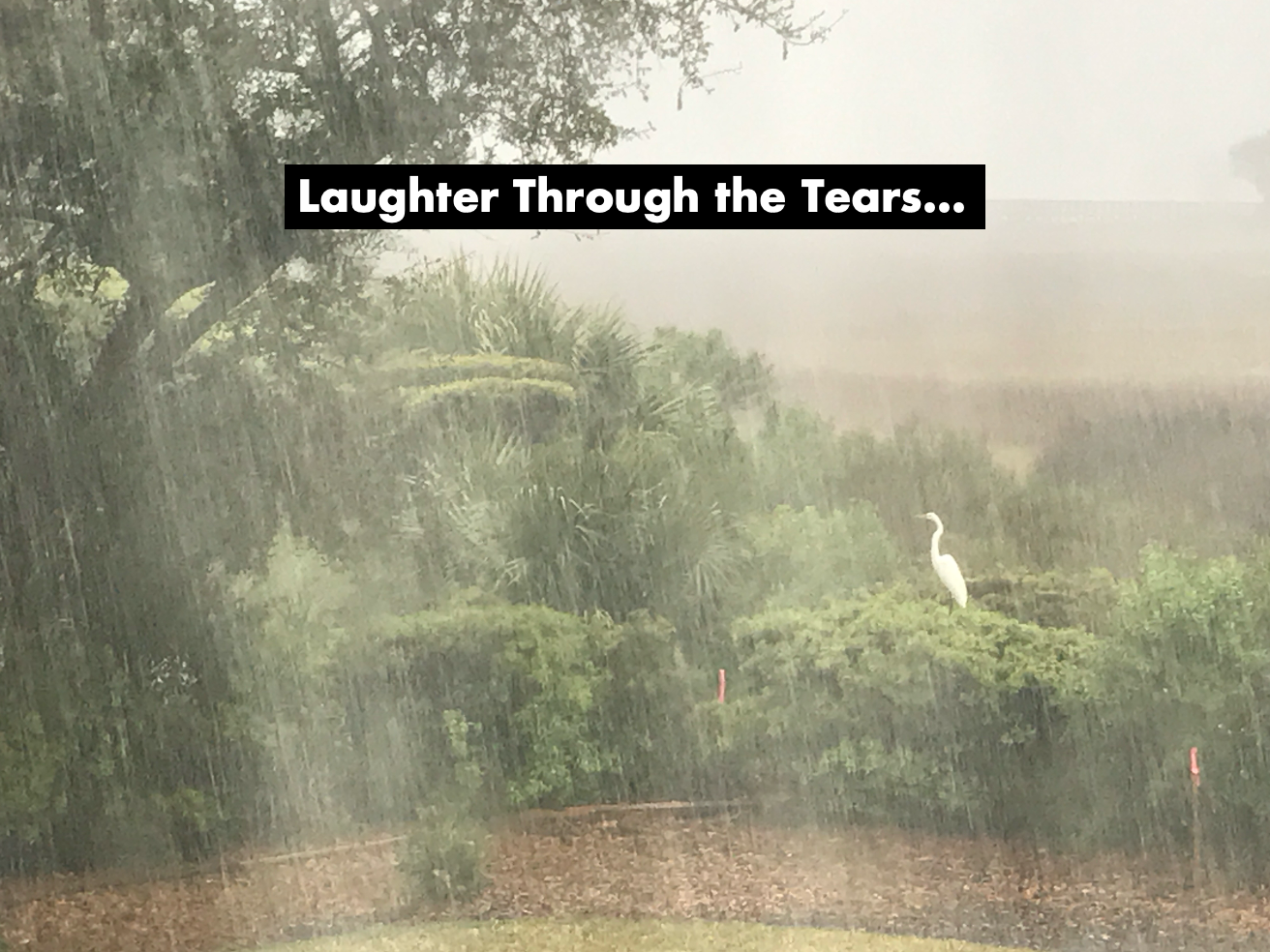
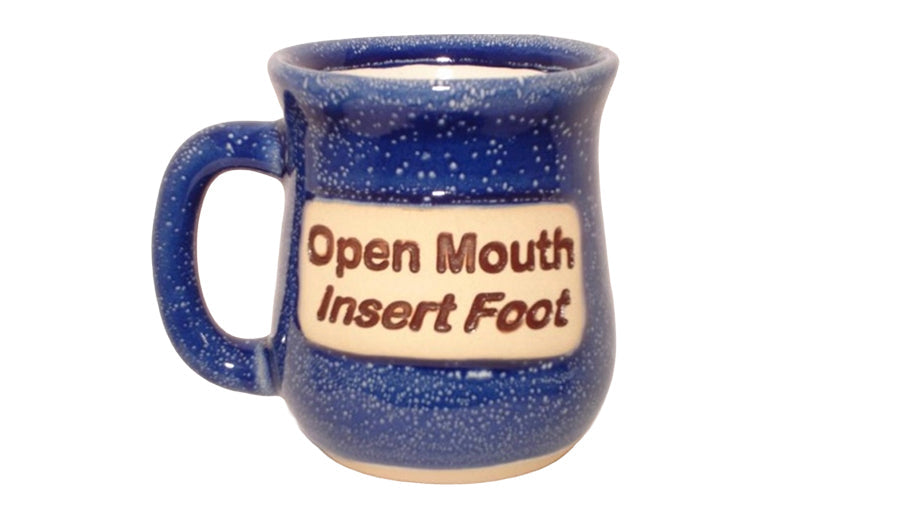
Same scene. Different perspectives.
Both ©Glenn W. Hoffman
Humor during sadness is a powerful, often unconscious coping method that can make life better in a whole host of ways. Embrace it. Use it. Enjoy it. It actually may be that best medicine!
Cheers & Laughter,


Share:
Help or Hurt?
Who was Glenn W. Hoffman? The Story Behind the Cards