

 (AKA: What to say when someone has died. And what not to.)
FACT: There are as many kinds of grief as there are people going through it. So nothing I say here will apply to every person or every death.
But what I can do is share the most common things said that are simply not helpful. Matter of fact, they hurt. Real-life sincere attempts at condolences said to me and to some close friends who have been through a major loss, too, that indeed are NOT helpful.
It's far from an exhaustive list. But it’s one that, if it spares one single grieving person one single additional moment of hurt, was well worth it.
I’ll start with 3 simple “PLEASE DON’Ts” and a suggestion for alternatives.
But unlike the other 87,000 “What Not To Say to a Grieving Person” links & memes, I’ll walk the talk and show how Thru Glenn’s Lens is trying to help you to avoid these “whoopsies.”
The statements are common, natural and (mostly) understandable. No one intends to make things more difficult. Those of us missing our “people” know that deep down. But trust me when I say, these things DO HURT.

#1: A MOST RIDICULOUS QUESTION:
How are you? (alt. How are you doing?)
To 99.9% of people: Do you really want an honest answer to that? Doubtful.
It’s generally a knee-jerk question born from discomfort and not knowing what to say. (You’re not alone. Our nation is highly Grief Intolerant/Illiterate. Just not comfortable with the implied weakness. Sad but true.)
It’s also nearly impossible for most of those mourning to respond to at the time, because none of us believe that most of you are interested in the real answer. So we’re forced to come up with something socially acceptable on the fly, somewhere between “I’m fine,” or “I’m hanging in there,” (my go-to) and the actual truth, which, in reality, requires a serious time commitment (“Well how long have you got...?”) and adult beverages!
Bluntly – how do you THINK we’re doing? (Especially if this is asked within the first 6 months.) You don’t honestly want to hear the real response (if it’s more than 6 words), and I (we) don’t really want to get into it during a random-grocery-store encounter or wherever-moment.
BETTER APPROACH: Simply lead with compassion and reality.
“I can’t imagine what you’re going through/ how hard this is... I want to be there for you – to talk together or just listen. I’m going to call you/come by if that’s OK?” (But only if you mean this. Otherwise, something more like...)
“I’m so sorry you’re going through this. I don’t really know what to say. Just know I’m thinking of you.”
This way, the one whose heart has been recently ripped out doesn’t have to either lie (“I’m OK. Thank you.”) or think on the fly of a pat, rehearsed response... and you don’t have to handle the rawness of a reply you’re not ready for in the first place.
We “Grievers” DO need to be able to talk about our real feelings. But not to the sheer number of people who casually ask this question. And not in the majority of places they ask it.
Please find a replacement?
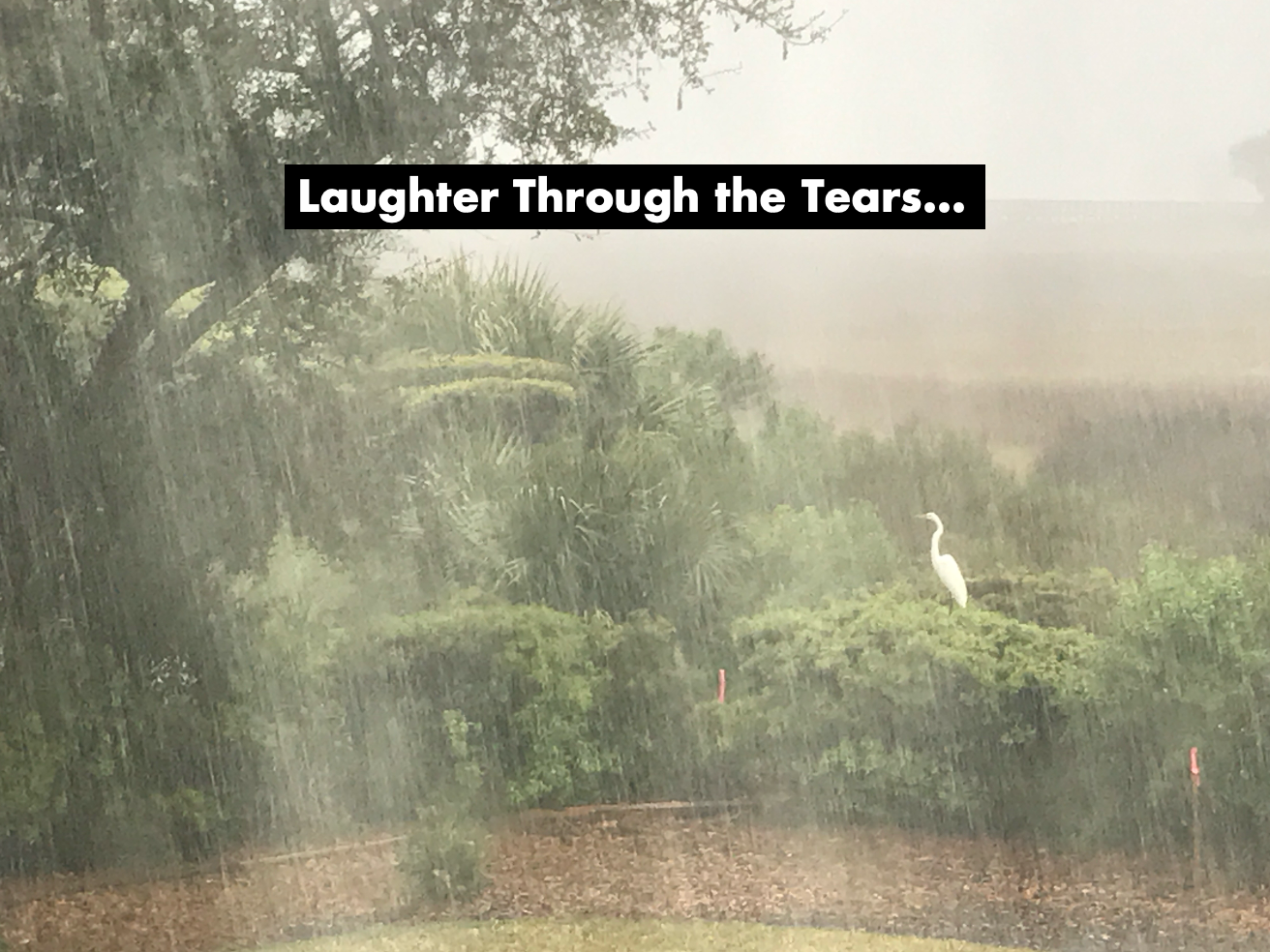
 Loss of Husband / A Lonely Egret Drowning Her Sorrows
#2: A MOST INSENSTIVE PRONOUNCEMENT:
“They’re in a better place...”
I don’t care what your own religious beliefs are – even assuming you believe this is true in the first place – you have no right, nor is grief the time, to impart your belief on someone whose world has been devastated and is missing their loved one desperately.
Don’t say it. Don’t say it. Just don’t say it.
“I’m heartbroken for you.” “There are no good words for this.” or even the sort of generic, “I’m sorry for your loss.” are all 1000% better. Trust me.

Loss of Wife / A Desolate Beach Brings Peace
#3: ANYTHING THAT STARTS WITH “AT LEAST...”
I mean anything. Do NOT try to minimize the loss, despite your well-intended desire to make it all better for your “person.” It can’t be done and the attempt to do so is hurtful. Though I know some are trying to soften a harsh situation, “at least” anything trivializes the pain being felt and has the opposite effect... plus risks adding anger or perception of insensitivity on top.
Simply address and validate the elephant in the room – the pain, the loss – or conversely, express your love for the one who has passed. Any of it would be welcomed — I for one will talk about Glenn till the proverbial cows come home with anyone who wants to, for as long as they want to! It’s how our story lives on. I think you’d be surprised how well that strategy will be received.
This statement could not be more TRUE!
Acknowledge the pain. Address the sadness. Honor the one who’s gone. Better yet, share a positive memory or a story! Be present – even if only for the moment. Be authentic. Don’t offer what you can’t deliver on – emotionally or physically. (More on this topic another time.) And just be human.
Our Loss of ________ Sympathy Cards were written by someone who lived the loss. Not a professional copywriter. Just a human being who was hurt deeply by death. We write what comforted us and/or what we wish someone had said. I know our cards, as raw as some of them may seem, will comfort.
But the sender’s relationship with the one grieving also comes into the mix. And it’s the nature of this relationship that dictates the level of expressiveness, rawness, concern, support and affection that will hit the mark.
So that’s why we have such a variety of Sympathy & Loss cards. To address not only the many types of grief and loss, but the relationships and feelings of the senders.
Daunting job. But I believe every person who is suffering through a loss and every person who cares enough to offer condolences, deserves a beautiful from-the-heart expression of those feelings. Long or short. Personal or less so. All deserve beauty in their presentation.
Sympathy: Short & Sweet / No Fancy Words Loss of Husband / Memories Twinkle in Your Mind
This is just a little glimpse at a few common “faux pas” when expressing condolences. More suggestions on how to help during grief will be coming in future posts.
Hope they provide some understanding and insight... and help in some small way.

With much compassion & caring,


Share:
The Surprising Emotional Benefits of Travel!
Laughter Through the Tears: The Role of Humor in Grief